
In 2025, around 36% of the US workforce, or 70 million Americans, were engaged in gig or freelance work, generating about $1.5 trillion in annual earnings. 5 From driving for Uber or Lyft to picking up shifts on work-on-demand apps, there are more opportunities to make cash independently than ever before.
While gig work gives people more flexibility to earn cash than traditional jobs do, it also has drawbacks. Gig workers often earn less than the minimum wage and are more likely to lose their jobs without prior warning.
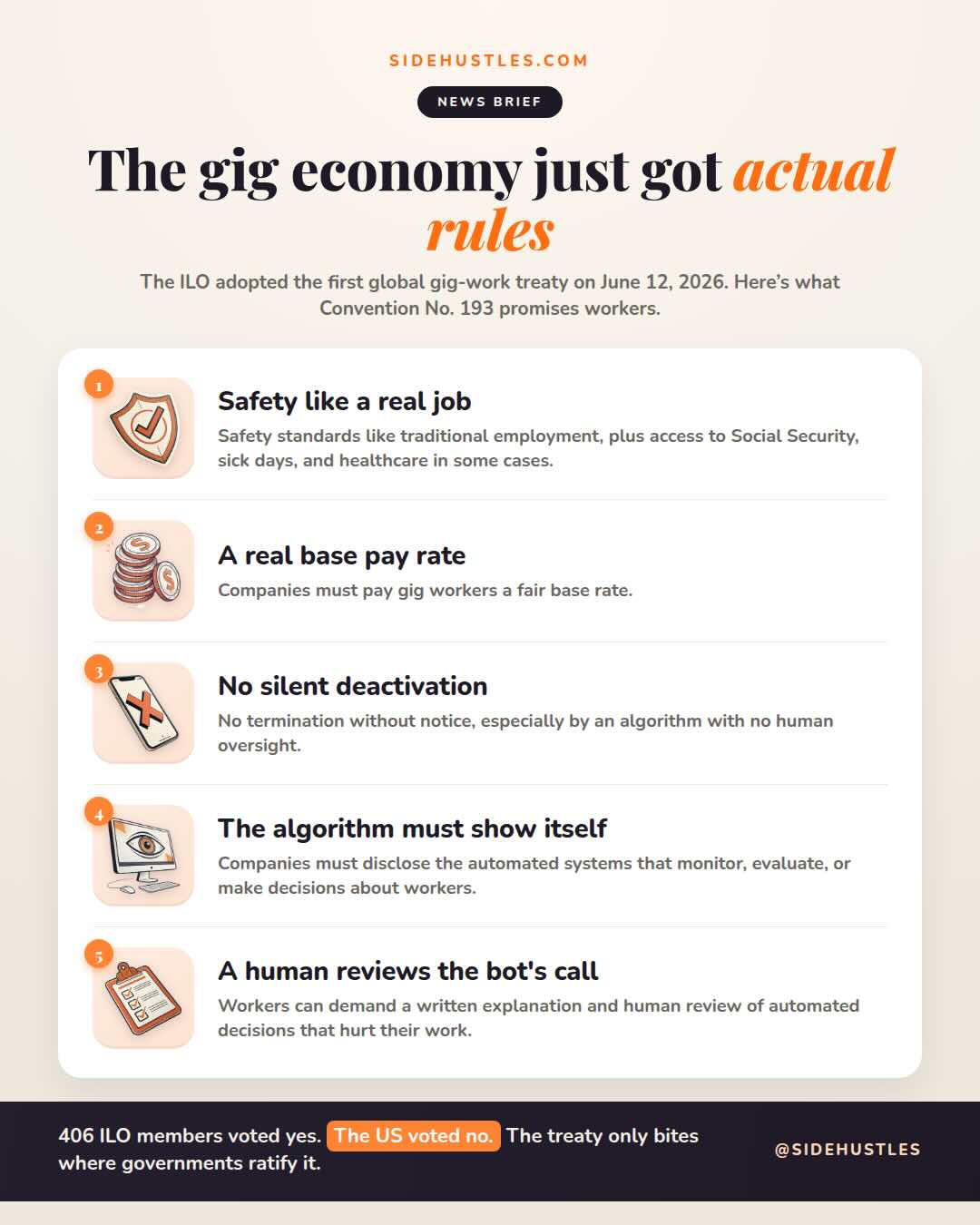
But things could change soon. In June 2026, the International Labor Organization (ILO) adopted the first global treaty to set binding labor standards for gig work.
The treaty covers issues like safe working conditions, fair pay, and data protection for gig workers.
For the millions of people who earn through popular platforms, these new labor standards are long overdue, but will the US actually implement them?